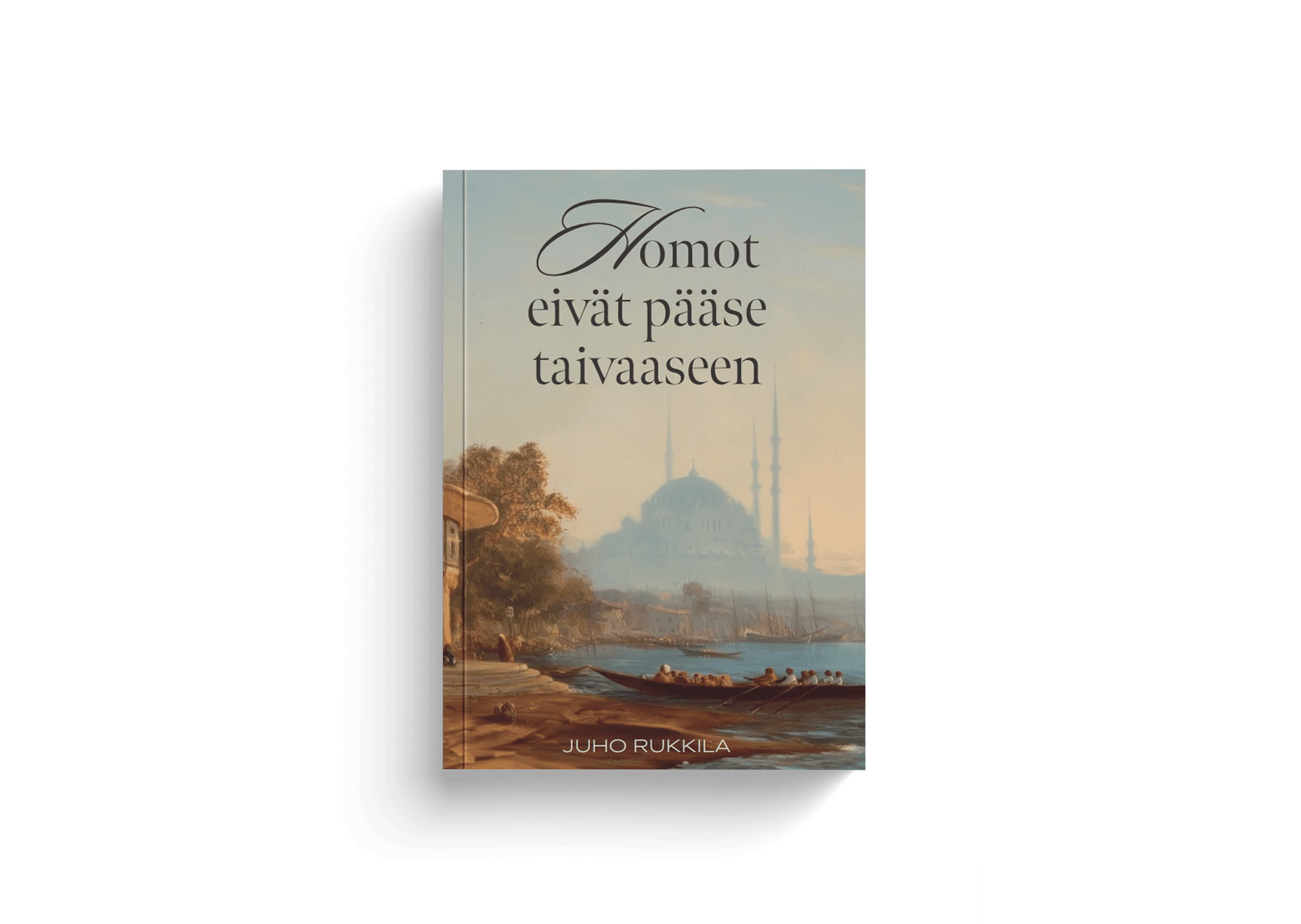
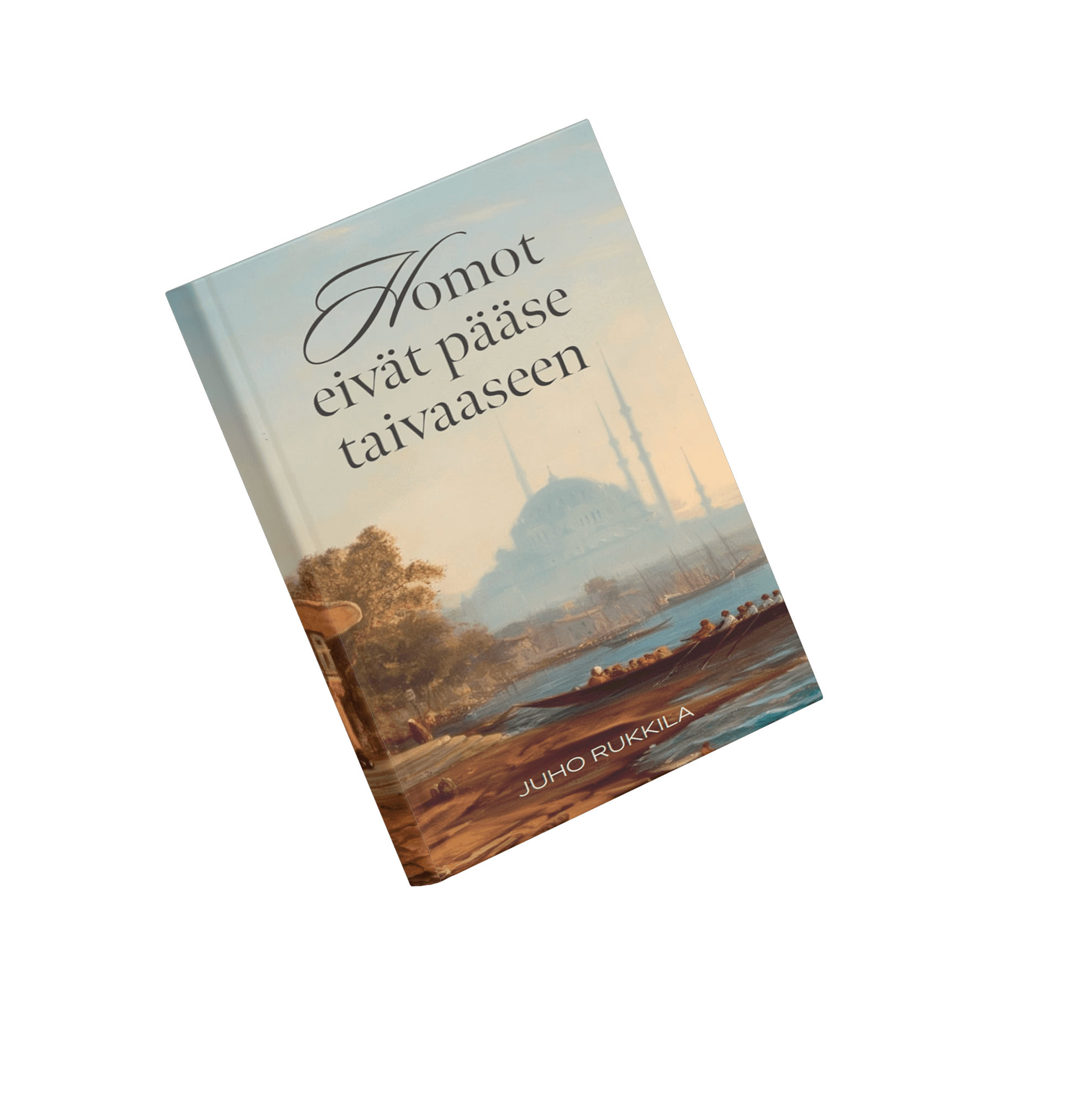
My debut novel
Gays can't go to heaven
Written by Juho Rukkila
Over 100 copies sold
This first book is more than a typical debut; it speaks of a place rooted in life itself.
Onur Caymaz
Author
From cover to cover, I was drawn into your story. The storytelling is smooth, engaging, and easy to follow. I really enjoyed it, and even laughed out loud a few times.
Nina
Order from





My debut novel
Gays can't go to heaven
Written by Juho Rukkila
Over 100 copies sold
This first book is more than a typical debut; it speaks of a place rooted in life itself.
Onur Caymaz
Author
From cover to cover, I was drawn into your story. The storytelling is smooth, engaging, and easy to follow. I really enjoyed it, and even laughed out loud a few times.
Nina
Order from
My debut novel
Gays can't go to heaven
Written by Juho Rukkila
Over 100 copies sold
This first book is more than a typical debut; it speaks of a place rooted in life itself.
Onur Caymaz
Author
From cover to cover, I was drawn into your story. The storytelling is smooth, engaging, and easy to follow. I really enjoyed it, and even laughed out loud a few times.
Nina
Order from
About Juho Rukkila
I'm Juho, a new writer from Helsinki. I'm carrying many lives inside one: former cabin crew member, florist, entrepreneur, husband, cat parent, and now—author. My debut novel, Homot eivät pääse taivaaseen (Gays Don’t Go to Heaven), arrives in early 2026


E-Book out now.
E-Book out now.


4 Questions about the book
Is the story based on real events, the freedom of fiction — or both?
The story is partly based on my own experiences in this life, shaped by everything I’ve lived through up to this point. What’s real and what’s fictional is left behind a bit of mystery. What I can say is that this love story is rooted in a real one — which is why I believe reality can be more remarkable than fiction.
Why did you want to write this book? What inspired you to tell this story?
I wanted to understand more about my own fears related to loss, which sometimes grow to ridiculous proportions. The reaction was intense: I cried almost half the time while writing the book. My main inspiration for the story is my beloved partner—without him, this story would have been very different, or perhaps it would not even exist in its current form.
How does queer identity shape the way we love, grieve, and are seen — especially when a relationship is not always recognized by the surrounding world?
In my opinion, problems begin when someone becomes afraid to show their true colours. This fear is especially strong when you’re young and still trying to understand your sexuality and life in general. Sometimes even a glance, a gesture, or the way you speak can give you away—especially around relatives or people who may react negatively toward queer people. Living in constant self-monitoring is a heavy burden and one of the reasons so many of us struggle with deeply personal issues such as alcoholism and mental health challenges.This fear also affects how we form and maintain romantic relationships. When love, grief, or other strong emotions are kept bottled up, the consequences can be serious. With age, many of us learn to care less about outside judgment, but the damage may already be done, and healing often takes time and professional support. That’s why attitudes need to change for good—human rights should never be debatable. The fight for equal rights is far from over, and we must stand united and speak up, especially for our trans sisters and brothers, who continue to face open discrimination and hate.
Was it a fully formed idea, or did it evolve during the writing process?
The idea was ready from the start. I had already decided on both the beginning and the end when I began writing, but just like in life, things tend to take their own course, and the story changed and grew along the way. The process was incredibly rewarding, and I thoroughly enjoyed watching the main character grow alongside me. I also had many discussions about the manuscript with a good friend, from whom I received valuable ideas on a few points that had been troubling me. A big thanks to my muse, Tuuli.
Is the story based on real events, the freedom of fiction — or both?
The story is partly based on my own experiences in this life, shaped by everything I’ve lived through up to this point. What’s real and what’s fictional is left behind a bit of mystery. What I can say is that this love story is rooted in a real one — which is why I believe reality can be more remarkable than fiction.
Why did you want to write this book? What inspired you to tell this story?
I wanted to understand more about my own fears related to loss, which sometimes grow to ridiculous proportions. The reaction was intense: I cried almost half the time while writing the book. My main inspiration for the story is my beloved partner—without him, this story would have been very different, or perhaps it would not even exist in its current form.
How does queer identity shape the way we love, grieve, and are seen — especially when a relationship is not always recognized by the surrounding world?
In my opinion, problems begin when someone becomes afraid to show their true colours. This fear is especially strong when you’re young and still trying to understand your sexuality and life in general. Sometimes even a glance, a gesture, or the way you speak can give you away—especially around relatives or people who may react negatively toward queer people. Living in constant self-monitoring is a heavy burden and one of the reasons so many of us struggle with deeply personal issues such as alcoholism and mental health challenges.This fear also affects how we form and maintain romantic relationships. When love, grief, or other strong emotions are kept bottled up, the consequences can be serious. With age, many of us learn to care less about outside judgment, but the damage may already be done, and healing often takes time and professional support. That’s why attitudes need to change for good—human rights should never be debatable. The fight for equal rights is far from over, and we must stand united and speak up, especially for our trans sisters and brothers, who continue to face open discrimination and hate.
Was it a fully formed idea, or did it evolve during the writing process?
The idea was ready from the start. I had already decided on both the beginning and the end when I began writing, but just like in life, things tend to take their own course, and the story changed and grew along the way. The process was incredibly rewarding, and I thoroughly enjoyed watching the main character grow alongside me. I also had many discussions about the manuscript with a good friend, from whom I received valuable ideas on a few points that had been troubling me. A big thanks to my muse, Tuuli.
Is the story based on real events, the freedom of fiction — or both?
The story is partly based on my own experiences in this life, shaped by everything I’ve lived through up to this point. What’s real and what’s fictional is left behind a bit of mystery. What I can say is that this love story is rooted in a real one — which is why I believe reality can be more remarkable than fiction.
Why did you want to write this book? What inspired you to tell this story?
I wanted to understand more about my own fears related to loss, which sometimes grow to ridiculous proportions. The reaction was intense: I cried almost half the time while writing the book. My main inspiration for the story is my beloved partner—without him, this story would have been very different, or perhaps it would not even exist in its current form.
How does queer identity shape the way we love, grieve, and are seen — especially when a relationship is not always recognized by the surrounding world?
In my opinion, problems begin when someone becomes afraid to show their true colours. This fear is especially strong when you’re young and still trying to understand your sexuality and life in general. Sometimes even a glance, a gesture, or the way you speak can give you away—especially around relatives or people who may react negatively toward queer people. Living in constant self-monitoring is a heavy burden and one of the reasons so many of us struggle with deeply personal issues such as alcoholism and mental health challenges.This fear also affects how we form and maintain romantic relationships. When love, grief, or other strong emotions are kept bottled up, the consequences can be serious. With age, many of us learn to care less about outside judgment, but the damage may already be done, and healing often takes time and professional support. That’s why attitudes need to change for good—human rights should never be debatable. The fight for equal rights is far from over, and we must stand united and speak up, especially for our trans sisters and brothers, who continue to face open discrimination and hate.
Was it a fully formed idea, or did it evolve during the writing process?
The idea was ready from the start. I had already decided on both the beginning and the end when I began writing, but just like in life, things tend to take their own course, and the story changed and grew along the way. The process was incredibly rewarding, and I thoroughly enjoyed watching the main character grow alongside me. I also had many discussions about the manuscript with a good friend, from whom I received valuable ideas on a few points that had been troubling me. A big thanks to my muse, Tuuli.
Praise for Gays can't go to heaven
This first book is more than a typical debut; it speaks of a place rooted in life itself.

Onur Caymaz
Author
This first book is more than a typical debut; it speaks of a place rooted in life itself.
Onur Caymaz
Author
This first book is more than a typical debut; it speaks of a place rooted in life itself.
Onur Caymaz
Author
From cover to cover, I was drawn into your story. The storytelling is smooth, engaging, and easy to follow. I really enjoyed it, and even laughed out loud a few times.
Nina S
From cover to cover, I was drawn into your story. The storytelling is smooth, engaging, and easy to follow. I really enjoyed it, and even laughed out loud a few times.
Nina S
From cover to cover, I was drawn into your story. The storytelling is smooth, engaging, and easy to follow. I really enjoyed it, and even laughed out loud a few times.
Nina S
I finished it in one sitting. It made me cry, laugh, and feel deeply moved. Absolutely brilliant. I’m speechless.
Nina O
I finished it in one sitting. It made me cry, laugh, and feel deeply moved. Absolutely brilliant. I’m speechless.
Nina O
I finished it in one sitting. It made me cry, laugh, and feel deeply moved. Absolutely brilliant. I’m speechless.
Nina O